
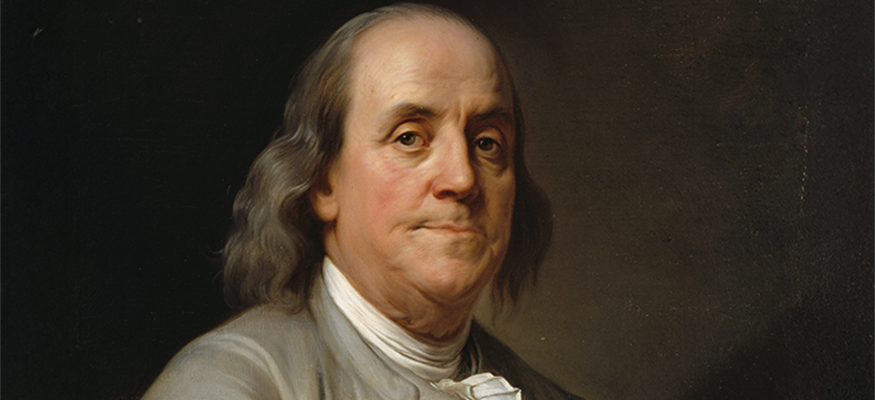
The story goes that Pennsylvania delegate to the Constitution Convention and revered elder statesman Benjamin Franklin was asked by prominent Philadelphian Elizabeth Willing Powel following the proceedings in September 1787 whether he and his colleagues had fashioned a republic or a monarchy.
“A republic,” Franklin is said to have replied, “if you can keep it.”
According to the Library of Congress, the source of this renowned exchange was Maryland delegate James McHenry. It is said that in later years, Powel did not recollect any such conversation, though could not deny that it happened.
Regardless, the phrase expresses the truth about not only what the Founding Fathers gifted us, but our charge and responsibilities.
We the People are to decide. As Luke 12:48 says, “For unto whomsoever much is given, of him shall be much required.”
As intended by the Founders, for most of our history the federal government had significant – but limited – powers. For instance, the Founders did not wish to establish power over functions that they knew were best left to local citizenry, such as education. Why was this so? As Hillsdale College president Larry Arnn wrote in his book Liberty and Learning:
“The Founders did not seek administrative control of education because the nature of man is, in their view, best able to flourish under a regime of limited government. And if the government is to be limited, then control of even vital things like education must be decentralized. The elevation of their view of the human being limits the dictates they give in every subject, including education.”
But have we kept it?
The so-called progressive era of the late 19th and early 20th centuries ushered in the theory that decentralization was outmoded and even dangerous. Good government, it was argued, was best administered by experts in a distant capital, and such experts should hold sway over we who were originally made sovereign.
Instead of a people governed by a document that can be held between thumb and forefinger, American citizens are ruled by an ever-expanding annotated Constitution. It weighs ten pounds and contains thousands of pages of interpretations of the Constitution by the Supreme Court. It is the product of the expansion of judicial power that began with the case Marbury v. Madison. It is tangible proof of the all-encompassing federal government.
That government has fostered a loss of confidence in the sovereignty of this republic. It has pushed ever-increasing burdens upon the individual and the small businessperson. It has produced bulky bills of hundreds or thousands of pages. It has contrived thousands upon thousands of regulations in The Federal Registry.
It has employed legions of lawyers to interpret these regulations and permitted swarms of compliance officers to brandish them like a sword. It has yawned as debt piles higher and the credit of the United States has eroded.
As a whole, the federal government
“…covers the surface of society with a network of small and complicated rules…The will of man is not shattered, but softened, bent, and guided; men are seldom forced by it to act, but they are constantly restrained from acting. Such a power…compresses, enervates, extinguishes, and stupefies a people, till each nation is reduced to nothing better than a flock of timid and industrious animals, of which the government is the shepherd.”
That was French author and philosopher Alexis de Tocqueville in the early 19th century, unknowingly describing today’s United States.
Such an environment drains the spirit of independence nobly won by our forefathers and successfully defended time and again. It drains the spirit of self-respect, sensitivity to one’s neighbors, and the proper relationship between citizen and government that is vital to liberty.
This is not what the Founders envisioned for us. In the words of James Madison: “The accumulation of all powers, legislative, executive, and judiciary, in the same hands, […] may justly be pronounced ‘the very definition of tyranny.”
Do we wish to keep the republic or cede it to meddling officeholders who accumulate power, quite a lot of which is then delegated to pesky bureaucrats who can crush the dreams and souls of people they have never met and in whom they have no interest under mountains of paperwork and regulations?
The answer rests with us, as does the authority. As the Founders intended – and as Benjamin Franklin may or may not have said – we decide whether we keep the republic. So we must.