
As the United States marks its 250th anniversary, Americans are taking time to look back at the people, stories, and symbols that helped shape the nation – in other words, classic Americana.
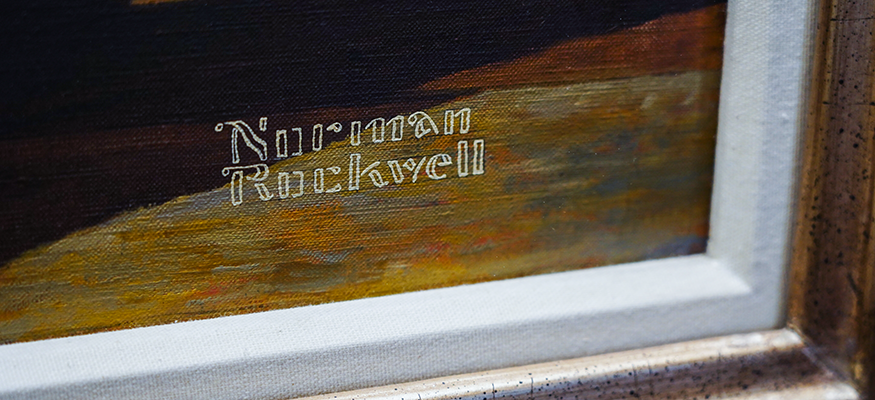
Among the most beloved of this genre is the work of Norman Rockwell. For decades, Rockwell painted scenes that felt familiar to millions of Americans. His art did not just hang on walls – it lived in homes, in magazines, and in the shared imagination of a country still finding its way.
Rockwell is often called the painter of American life, and for good reason. His illustrations showed everyday moments that many people instantly recognized and felt intensely: a family gathered for Thanksgiving dinner, a young boy getting a haircut, a soldier returning home. These were not grand historical events, but simple, human experiences expressed with beautifully elegant simplicity. Rockwell had a gift for capturing a range of emotion – joy, worry, pride, and hope – in a way that felt real and honest.
Much of Rockwell’s work reached the public through The Saturday Evening Post. From 1916 to 1963, he created 323 covers for the enormously popular magazine.
At a time before television became widespread, the Post helped create a shared national culture that social media, niche programming, and tribalism erodes. People from Maine to California could open the same issue and see the same image on the cover. Rockwell’s illustrations became a kind of visual language for the country, helping Americans see themselves and each other in a common story.
These images often showed an America that seemed peaceful, neighborly, and full of promise. Modern critics might say that Rockwell’s work was too idealized and overly romantic, that it presented a version of America that was more hopeful than real. There is perhaps some truth in that assessment. Rockwell often highlighted the good and the relatable in everyday American life. He painted scenes where people helped each other, where families stayed close, and where communities worked together.
But that is not the whole story.
Rockwell was not blind to the struggles and conflicts of his time. As his career went on, especially in the 1960s, he began to take on more serious subjects. One of his most famous later works, “The Problem We All Live With”, shows a young black girl being escorted to school by federal marshals during school desegregation. The image of the girl, dressed in a lovely dress and walking with perfect posture and eyes fixed straight ahead by a building with a graffitied racial slur and the remnants of a tomato thrown her way on its wall is simple, but powerful. It reminds viewers that the American story includes courage in the face of injustice and cruelty.
Rockwell also explored themes of war and peace. During World War II, he created the “Four Freedoms” series, inspired by President Franklin D. Roosevelt’s speech about freedom of speech, freedom of worship, freedom from want, and freedom from fear. These paintings were widely shared and helped people understand what the nation was fighting for during World War II. They demonstrated that patriotism is not just about pride, but also about protecting the rights and dignity of fellow citizens.
Rockwell’s ability to balance hope with honesty is part of what makes his work endure and is an example of the pinnacle of classic Americana. He celebrated the best of America while also acknowledging our challenges and shortcomings. His paintings remind us that the republic has always been a work in progress – one shaped by both its ideals and its imperfections.
As we celebrate 250 years of American independence, Rockwell’s art offers something valuable. It invites us to reflect upon who we are and who we want to be. His images encourage us to notice the small, meaningful moments in everyday life. They remind us that the American story is not only written in history books, but also in kitchens, classrooms, and town squares.
Americana, at its heart, is about shared experience that today can sometimes seem distant. It is about the traditions, values, and memories that connect people across time and place. Norman Rockwell helped give shape to those connections. Through his work, generations of Americans have seen reflections of their own lives and hopes.
Rockwell’s paintings speak to us still. They remind us that while times may change, certain values – kindness, community, and perseverance – remain constant and very much American. As the nation looks ahead to its next chapter, these are qualities worth holding onto.
In remembering Norman Rockwell and the Americana he represents, we are also honoring the Americans and the promise of America that he painted. Take some time during this commemoration of our 250th anniversary to study and contemplate Rockwell’s works. The stories within, like the nation itself, are full of complexity, challenge, and possibility. And in that, there is both reason for pride and a call to keep building a more perfect union.