
ELP Administrator Dani Landivar
“A word fitly spoken is like apples of gold in pictures of silver” — Proverbs 25:11
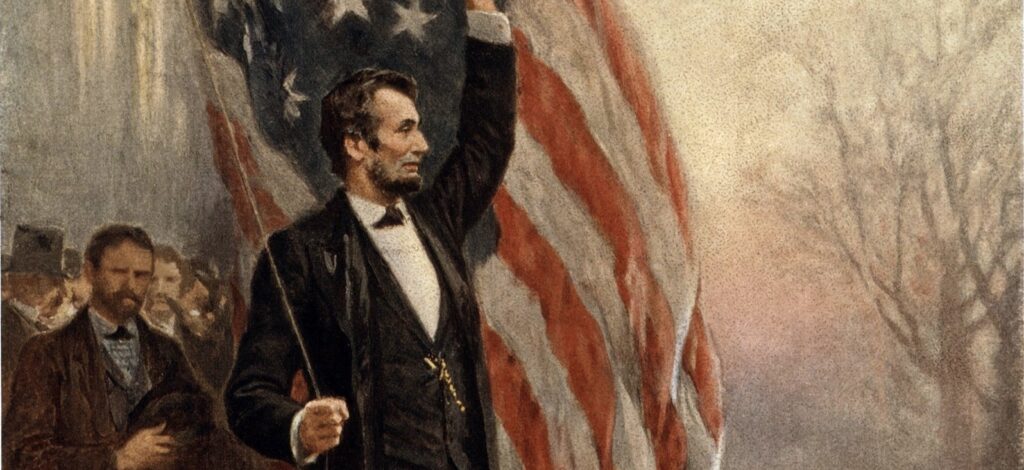
Abraham Lincoln, in his undelivered speech Fragment on the Constitution and the Union, described the Declaration of Independence as “the apple of gold” and the Constitution as the “frame of silver” built around it to preserve and protect it. Few metaphors have captured the American founding more clearly because Lincoln understood something many modern Americans have forgotten: the Constitution was never meant to exist apart from the moral truths that gave it life.
Lincoln wrote: “The assertion of that principle, at that time, was the word, ‘fitly spoken’ which has proved an ‘apple of gold’ to us. The Union, and the Constitution, are the picture of silver, subsequently framed around it. The picture was made, not to conceal, or destroy the apple; but to adorn, and preserve it. The picture was made for the apple—not the apple for the picture.”
That “apple of gold” was the self-evident truth proclaimed in the Declaration of Independence: that all men are created equal and endowed by their Creator with certain unalienable rights. The Constitution was designed to preserve that truth, not replace it. The frame existed for the apple.
Today, however, liberty is often spoken of as though it can survive untethered — detached from virtue, untouched by moral restraint, accountable to no truth higher than human desire. We are told freedom can flourish within a morally neutral society. Yet history, human nature, and the founders themselves suggest otherwise. A free people cannot remain free for long without the character necessary to govern themselves.
The Constitution is not enchanted parchment, capable of sustaining liberty by its own power. A tree cannot outlive its roots, nor can a republic endure once severed from the moral soil that first gave it life.
America’s constitutional order emerged within a culture deeply rooted in biblical morality and the natural law tradition. The marriage of fides et ratio (faith and reason) shaped the Western concept of human dignity, while the biblical tenet that humanity is formed in the Imago Dei (the image of God) provided a durable moral foundation for the conviction that every person has intrinsic value. Natural law traditions, stretching from Aristotle and Cicero to Thomas Aquinas and John Locke, reinforced the conviction that certain truths and rights stand above the authority of the state itself. The founders did not establish a theocracy, but neither did they imagine an amoral republic. Their system assumed a people formed by transcendent obligations — truths discoverable through both revelation and reason.
If rights come only from the government, then the government may redefine or remove them. But if rights come from a source higher than the government, they remain beyond the reach of kings, presidents, courts, or legislatures. Government, therefore, had to be limited, and citizens had to possess the moral discipline necessary for self-government.
John Adams famously warned that the Constitution was made “only for a moral and religious people” and was wholly inadequate for governing any other. His statement was not exclusionary. It was observational. The founders understood that no system of laws, however carefully designed, could preserve freedom among a people unwilling to govern themselves.
This is where modern America finds itself at a dangerous crossroads. We increasingly attempt to preserve the silver frame while discarding the truths that once gave it meaning. We celebrate constitutional rights while severing them from the moral foundations that originally justified them.
But Lincoln warned against precisely this confusion: “The picture was made for the apple—not the apple for the picture.” The Constitution was never intended to become a substitute for the moral order beneath it. It was designed to preserve and protect a people already shaped by certain transcendent truths.
Laws may restrain evil temporarily, but they cannot cultivate virtue on their own. Virtue is not manufactured by legislatures. It is cultivated quietly — around dinner tables, within churches, in the slow formation of souls taught to honor responsibility, sacrifice, humility, and truth.
The solution is not merely political reform, but moral renewal: the recovery of virtue, faith, family, and the understanding that rights are inseparable from duties. It requires the courage to once again acknowledge the philosophical and spiritual foundations that shaped the American republic in the first place.
The future of America will not ultimately be determined by whether we preserve words inked upon parchment alone, but by whether the spirit that once animated those words still lives within the people themselves.
The silver frame cannot preserve the apple forever if the roots that produced that apple are allowed to die. If the roots beneath the republic can be restored, might the tree yet bear fruit for generations to come?