
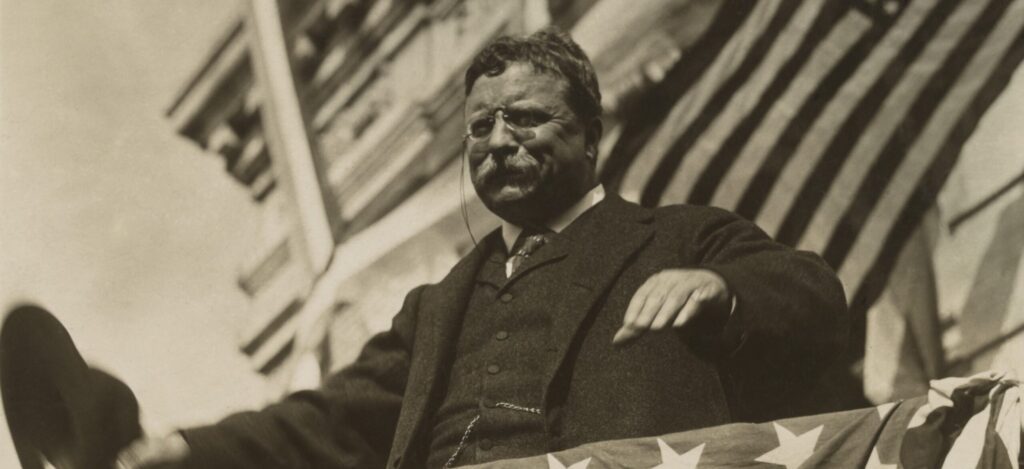
The following was written by ELP intern Ty Keller.
In early 1900’s America, President Theodore Roosevelt saw a storm brewing within Europe and made a claim: “Nine-tenths of wisdom is being wise in time.” What President Roosevelt stated here is a long-recognized, but often forgotten in action, practice of statesmanship: prudence. Prudence is practical wisdom—using the wisdom you have garnered to make sound and deliberate decisions. This has been lost in our current day and age. It’s been lost by our politicians, and it shows in our actions.
In an increasingly politically divisive world, we have drawn battle lines. We have allowed career politicians to gain and maintain power, often driven by broken ideologies and influenced by corrupt financial interests. Rather than governing with wisdom, deliberation, and reverence for our founding documents, decisions are too often guided by questions of “electability” or “inclusiveness” instead of constitutionality.
The result is a growing sense of helplessness among the people and a government mired in stagnation. What our nation needs is not more politicians, but more statesmen and stateswomen. Leaders who exercise prudence, who are committed to thoughtful, well-informed decision-making, and who prioritize principle over popularity.
But this does not mean our ultimate goal is simply to vote out every corrupt politician. That task, while admirable, cannot be accomplished within a single human’s lifetime. Instead, the responsibility falls on us to become statesmen ourselves.
This does not mean that each of us will hold public office as a Representative, Senator, or President. Rather, it means we must learn to govern ourselves well. In doing so, we shape the character and direction of our families, our communities, our churches, and our local institutions. By embracing this responsibility, we become the kind of citizens the Founding Fathers envisioned us to be.
This requires prudence. We must approach our decisions—how we engage our communities, how we vote, how we teach, and how we influence others—with careful thought and intentionality. Our actions should reflect both wisdom and a commitment to learning, as we seek to understand the original intent of our nation and the legacy upon which it stands.
We must also take the weight of our choices seriously, recognizing the lasting impact they have and the influence they carry for the next generation. And we must embrace this responsibility with urgency and confidence, trusting that through our efforts, we can help shape the future of this nation for generations to come.
Washington puts it best in his farewell address: “The name of American, which belongs to you in your national capacity, must always exalt the just pride of patriotism more than any appellation.”
So, let’s be more like George Washington, James Madison, Henry Clay, and other founders who built this great nation with wisdom and conviction. Let us understand what we have in the great American experiment of republicanism and not squander the opportunity we have been blessed with. Let us use prudence in an era that is marked by unthoughtful and harmful political decisions. Let us stand on the principles and values that built this nation and the rights that we have enshrined in our Constitution from Our Lord.
Let us be statesmen and stateswomen.